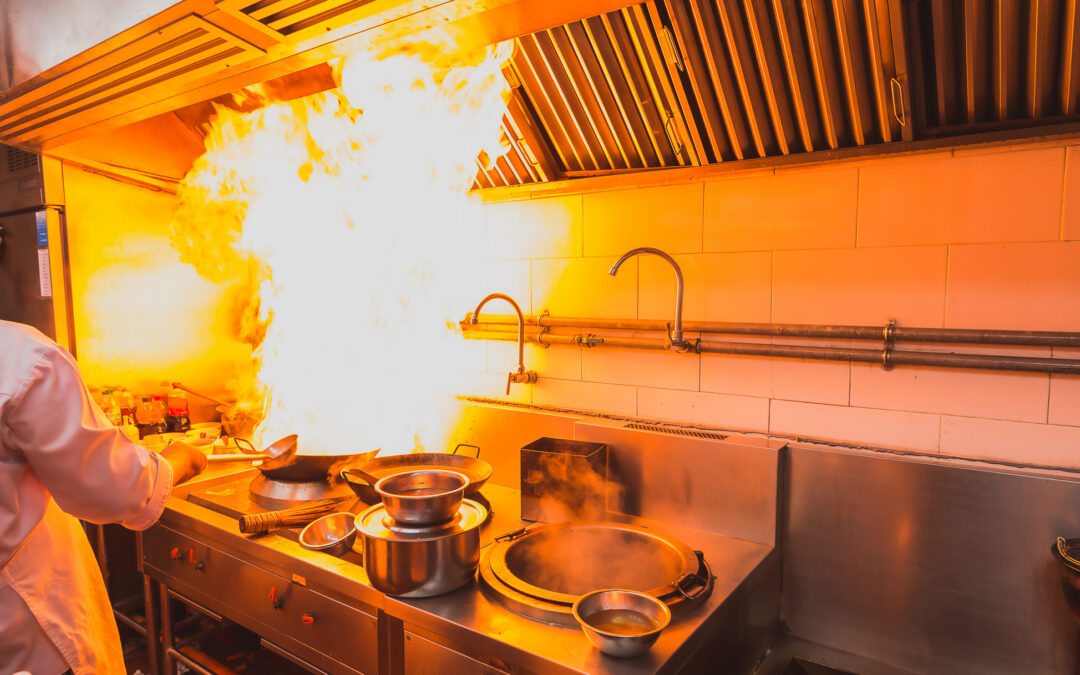
Commercial kitchens are high-intensity, fast-paced environments where heat, open flames, electricity, and highly flammable cooking oils constantly intersect. While most kitchen staff know the basics of fire safety, many devastating fires start from overlooked hazards—issues that build up slowly over time until a single spark triggers a crisis.
For restaurant owners, chefs, and managers across Northern California, keeping a kitchen safe isn’t just about passing your next health or fire department inspection; it’s about protecting your staff, your customers, and your business investment.
Here are five hidden fire hazards commonly found in commercial kitchens and the practical steps you can take to fix them before they lead to a disaster.
- Hidden Grease Accumulation in Ventilation Hoods and Ducts
Everyone wipes down the stovetops and counter surfaces at the end of a shift, but grease doesn’t just stay on cooking appliances. Vaporized grease travels up into exhaust hoods, filters, and deep into the ductwork. Over time, this creates a thick, highly flammable layer of fuel hidden completely out of sight.
If a flash fire occurs on the cookline, a grease-laden hood acts as a fuse, pulling the flames straight up into the building’s infrastructure.
The Fix: Clean metal hood filters daily or weekly depending on your cooking volume. However, surface cleaning isn’t enough—schedule regular, professional hood and duct cleanings that scrape and wash the system down to bare metal all the way to the roof fan.
- Neglected Frying Equipment & Degraded Cooking Oils
Deep fryers account for a massive percentage of commercial kitchen fires. The hazard isn’t just the open heating element; it’s the oil itself. As cooking oil breaks down through repeated heating, its flashpoint (the temperature at which it catches fire) drops significantly. Additionally, faulty thermostats can fail to shut off heating elements, allowing oil to heat past its ignition point without warning.
The Fix: Change and filter frying oil regularly to keep flashpoints high. Test temperature controls and auto-shutoff limit switches during routine equipment maintenance. Finally, keep a clear perimeter around fryers so hot oil splashes don’t contact nearby open flames or electrical outlets.
- Frayed Wiring and Overloaded Electrical Circuits
Kitchens are wet, high-heat environments—conditions that accelerate the wear and tear of electrical components. Heat lamps, industrial mixers, walk-in coolers, and countertop appliances pull heavy electrical loads. Damaged power cords, outlets exposed to moisture, or overuse of extension cords create severe arc-flash and electrical fire risks.
The Fix: Eliminate extension cords completely, as they are strictly temporary tools rather than permanent wiring solutions. Inspect cords weekly for cracked insulation, exposed wires, or bent prongs on all equipment plugs. Ensure all outlets near sinks or liquid prep stations are equipped with working Ground Fault Circuit Interrupters (GFCI).
- Improper Storage of Flammable Materials
In a cramped back-of-house area, storage space is always at a premium. It’s easy for staff to accidentally stack cardboard boxes, paper towels, linen aprons, or cleaning chemicals near hot appliances, water heaters, or electrical panels. A stray spark or radiant heat from a continuously running appliance can easily ignite dry goods stacked too close.
The Fix: Enforce a strict 3-foot clearance rule around all heat-producing appliances, electrical panels, and water heaters. Store flammable cleaning solvents and aerosol cans in designated metal safety cabinets away from cooking lines. Keep dirty, oil-soaked linens in covered metal containers to prevent spontaneous combustion.
- Unmaintained or Incorrect Fire Suppression Equipment
When a kitchen fire breaks out, you rely on two main lines of defense: your automated hood fire suppression system and portable fire extinguishers.
A common and dangerous mistake is relying solely on standard ABC fire extinguishers. Standard extinguishers are effective on wood or paper, but using them on hot grease fires can actually splash the burning oil and spread the fire across the room. Furthermore, suppression systems that haven’t been inspected may fail to discharge automatically during an emergency.
The Fix: Ensure your kitchen has readily accessible, fully charged Class K wet chemical fire extinguishers, which are specifically designed to smother high-temperature fat and vegetable oil fires. Keep hood suppression nozzles uncapped, angled correctly over cooking equipment, and free of grease buildup. Have your automated fire suppression system tested and certified every six months by a licensed fire protection professional.
Protect Your Kitchen and Stay Compliant
Fire safety isn’t a one-time setup—it requires daily habits, vigilant staff, and trusted local service partners. By identifying these hidden hazards early, you can keep your kitchen running smoothly and avoid costly shutdowns or code enforcement issues.
Need help keeping your business protected? From Class K fire extinguisher sales and refills to commercial kitchen fire prevention inspections and CO2 gas detection compliance, Eureka Oxygen Company provides complete fire protection services for restaurants and food service operations across Northern California. Contact Us Today to schedule an inspection or upgrade your fire suppression equipment!
Eureka Oxygen Company
2810 Jacobs Avenue
Eureka, CA 95501
Phone (707) 443-2228
Fax (707) 443-2242
Follow Us:

Subscribe to our Email List
© 2026 Eureka Oxygen Company, Inc.