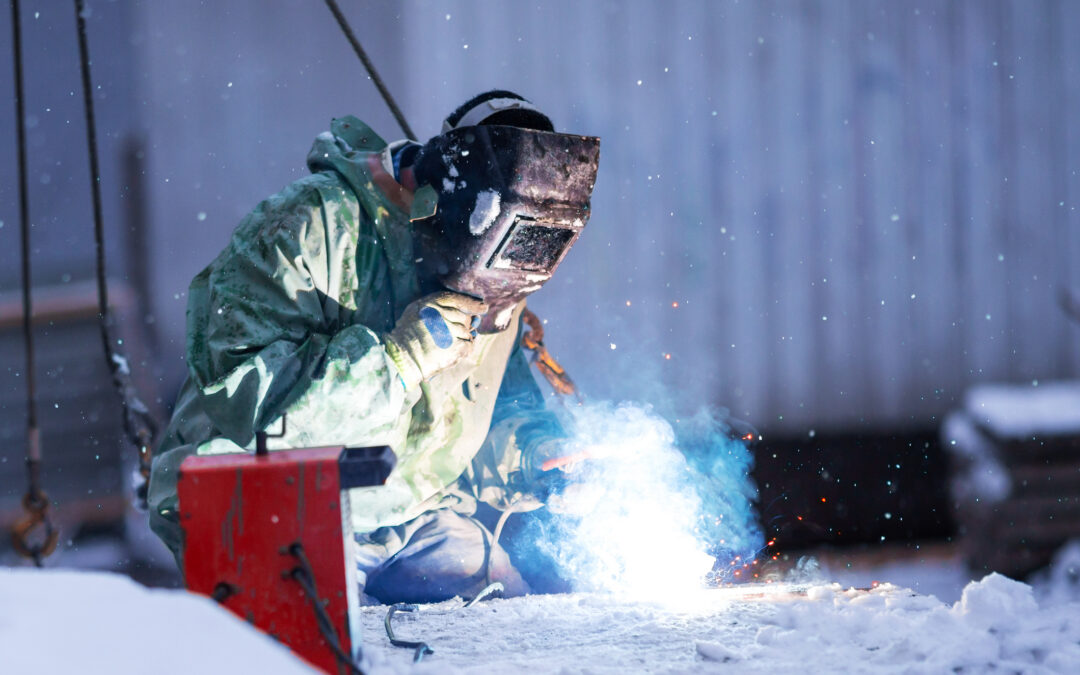
Here are seven important winter welding tips to help keep your equipment operating efficiently and your projects on schedule
1. Protect Welding Equipment from Cold and Moisture
Winter weather can expose welding equipment to conditions that accelerate wear and create operational problems.
Rain, condensation, and temperature fluctuations can introduce moisture into equipment and electrical connections. Cold temperatures can also affect cables, hoses, and other components.
Before winter arrives, inspect your welding equipment and prepare it for seasonal conditions.
Winter equipment maintenance checklist:
• Inspect welding cables for cracked or damaged insulation.
• Check hoses, fittings, and connections for wear.
• Keep welding machines protected from rain, snow, and excessive moisture.
• Store equipment according to the manufacturer’s temperature and environmental recommendations.
• Inspect electrical connections and power supplies.
• Keep equipment clean and dry when not in use.
If equipment is moved from a cold environment into a warm shop, condensation may develop. Allow equipment to acclimate according to the manufacturer’s instructions before energizing it.
For outdoor welding operations, use weather protection that maintains required ventilation and does not create additional fire or electrical hazards.
Preventative maintenance can help reduce unexpected equipment problems during the busiest part of winter.
2. Understand How Cold Weather Affects Weld Quality
Cold weather can influence welding results, particularly when working with thicker metals, structural components, and materials that require controlled welding procedures.
Low material temperatures can increase the risk of certain welding defects, including hydrogen-assisted cracking in susceptible steels under unfavorable conditions.
Cold metal can also affect the way welders prepare surfaces, control the welding process, and manage preheating requirements.
To maintain weld quality during winter:
• Remove moisture, frost, ice, oil, and other contaminants from the work surface.
• Follow the applicable welding procedure for the material and application.
• Verify material temperature when preheating or minimum-temperature requirements apply.
• Use appropriate temperature-measuring equipment when required.
• Protect the welding area from wind and precipitation.
• Follow the electrode, filler-metal, and consumable manufacturer’s storage recommendations.
Important: Do not assume that simply increasing the heat setting will solve cold-weather welding problems. Material thickness, steel composition, joint design, heat input, and the applicable welding procedure all influence the correct approach.
For critical structural or industrial applications, follow the approved welding procedure and applicable engineering requirements.
3. Store Welding Gas Cylinders Properly During Winter
Industrial gas cylinders require appropriate storage and handling throughout the year, including during winter weather.
Rain, snow, freezing conditions, and temperature fluctuations can complicate cylinder storage, transportation, and use.
Proper storage helps protect cylinders and their associated equipment from physical damage and environmental exposure.
Follow these winter cylinder safety practices:
• Secure cylinders against falling.
• Protect cylinders from vehicle impacts and other physical damage.
• Keep valves and connections protected from contamination.
• Follow the manufacturer’s temperature and storage recommendations.
• Keep cylinder identification labels visible and readable.
• Protect regulators and hoses from damage caused by ice or accumulated moisture.
• Maintain appropriate separation between gases where required by applicable regulations.
Never use an open flame, torch, or other uncontrolled heat source to warm a gas cylinder.
Do not assume that every gas behaves the same way at low temperatures. Gas pressure, flow, and performance can vary depending on the gas, cylinder conditions, equipment, and application.
If a cylinder or regulator appears frozen or is not functioning correctly, stop using the equipment and consult the gas supplier or equipment manufacturer for appropriate instructions.
4. Check Shielding Gas Flow in Cold Conditions
Shielding gases play an essential role in protecting the molten weld pool from atmospheric contamination.
Processes such as MIG and TIG welding depend on suitable shielding gas selection and delivery to produce consistent results.
During winter, wind, rain, damaged hoses, and poor connections can interfere with shielding gas effectiveness.
For example, outdoor wind can disperse shielding gas before it adequately protects the weld. Excessive gas flow can also create turbulence that draws surrounding air into the shielding area.
To maintain effective shielding:
• Inspect gas hoses and connections for leaks or damage.
• Verify that the regulator and flowmeter are suitable for the application.
• Confirm that gas flow settings match the welding procedure.
• Use appropriate wind protection for outdoor welding.
• Keep moisture and contaminants away from gas connections.
• Verify shielding gas supply before beginning production work.
If welds develop porosity or other defects, investigate the cause rather than automatically increasing gas flow.
Potential causes include contaminated base metal, leaks, inadequate shielding, excessive turbulence, and improper welding technique.
Using the correct shielding gas and maintaining the delivery system can help support consistent welding results in changing weather conditions.
5. Prepare Construction and Repair Crews for Winter Work
Winter often brings additional challenges for contractors, logging operations, equipment repair businesses, and construction crews.
Outdoor repairs may take place in wet conditions, on muddy job sites, or in locations where temperatures drop significantly overnight.
Preparation can help crews maintain productivity while reducing avoidable safety risks.
Before beginning a winter repair project:
1. Check the weather forecast and evaluate site conditions.
2. Inspect welding machines, generators, extension cords, and other equipment.
3. Confirm that required gases, consumables, and replacement parts are available.
4. Establish a suitable work area protected from wind and precipitation.
5. Check that workers have appropriate cold-weather personal protective equipment.
6. Confirm that the welding procedure permits the expected environmental conditions.
Cold-weather clothing must be appropriate for welding work. Synthetic fabrics that can melt, combustible outerwear, and clothing that interferes with protective equipment may introduce additional hazards.
Workers should also remain alert to slippery surfaces, reduced visibility, and changing ground conditions.
A well-prepared repair crew can spend less time dealing with preventable equipment problems and more time completing the work.
6. Inspect Gas Regulators, Hoses, and Connections
Cold temperatures and repeated exposure to moisture can make equipment inspections particularly important during winter.
Regulators, hoses, fittings, and connections are critical parts of a welding gas delivery system. Damaged or incompatible components can cause leaks, inconsistent flow, or other operating problems.
Before using gas equipment, check for:
• Cracked, worn, or damaged hoses.
• Loose or damaged fittings.
• Signs of corrosion or contamination.
• Damaged regulator gauges.
• Leaks identified using approved inspection procedures.
• Equipment that is incompatible with the gas being used.
Do not attempt to force frozen valves or fittings to operate!
Never apply oil or grease to oxygen equipment. Oxygen service requires equipment and handling practices specifically designed to prevent dangerous reactions with combustible contaminants.
Replace damaged components with compatible equipment approved for the intended gas and application.
When equipment does not operate normally, stop work and obtain guidance from a qualified technician, the equipment manufacturer, or your gas supplier.
7. Plan Your Winter Industrial Gas Supply in Advance
Winter weather can complicate deliveries, outdoor work schedules, and equipment maintenance.
For businesses that rely on welding gases every day, running out of argon, oxygen, acetylene, or shielding gas mixtures can interrupt production and delay projects.
Planning ahead helps maintain an adequate supply of the gases and welding products your business needs.
Consider these practical steps:
• Review your typical winter gas consumption.
• Identify upcoming projects that may require additional supplies.
• Monitor cylinder inventory before beginning major jobs.
• Establish reorder points for frequently used gases.
• Check delivery arrangements when severe weather is forecast.
• Keep suitable backup supplies when justified by your operational needs.
Different welding processes require different gas products and mixtures. Confirm your requirements before ordering, particularly when working with specialized materials or procedures.
A dependable industrial gas supplier can help you understand available products, coordinate supply arrangements, and identify suitable options for your operation.
Planning ahead is particularly valuable for fabrication shops, maintenance departments, and contractors working across geographically dispersed service areas.
Get Ready for Winter with Eureka Oxygen CompanyWinter preparation is an important part of maintaining safe and efficient welding operations.
By protecting equipment from moisture, following appropriate cold-weather welding procedures, inspecting gas delivery systems, and planning your industrial gas supply, your business can reduce avoidable disruptions during the winter months.
Eureka Oxygen Company supports welding professionals, contractors, repair facilities, and industrial businesses with industrial gases, welding supplies, equipment, and safety products.
Whether you are preparing for winter maintenance, stocking up on shielding gases, or sourcing supplies for an upcoming fabrication project, having the right products available can help keep your operation moving.
Need welding gases or industrial supplies this winter?